Showing posts with label historical marker. Show all posts

Tuesday, November 23, 2021

The Post Man


 Post Cereals has been one of the giants in the breakfast game for quite awhile now.  From Grape Nuts to Fruity Pebbles, everybody has a favorite.  But cereal dynasties aren't born, they're made.  And this one was made by a guy named C.W. Post.  If you look into his life you'll find out that he wasn't always such a great guy but but that milk of negativity wasn't enough make his legacy soggy enough to deny him a statue...and I just happened to visit it recently.

 And there he sits, perched high upon his throne, welcoming visitors to the Garza County Courthouse in Post, TX.  Yes, he has a town named after him.  And, yes, he named it after himself after he founded it.  Of course, it was originally called "Post City" and it was meant to be a paradise based on his utopian vision which involved prohibiting alcohol and recreational fornication.  But currently, it's not that different from any other small Texas town.


Right behind the statue is a Texas Historical marker.  It reads:

     "Internationally known creator of Post Cereals, advertising genius, inventor and innovator, founder of Post City in 1906. Through the purchase of the Curry Comb Ranch and adjacent land approximating 225,000 acres he began his dream of building self-contained model community of towns and farms. Mr. Post financed, supervised and built town without profit to himself. Settlers were offered ownership of business or farm sites far below cost. Mr. Post planned community of debt-free private ownership in every field of endeavor, and sought to make his vision true to its purpose."
 

I'm sure this isn't the only monument to a cereal magnate but my travels have yet to take me to Battle Creek, MI to investigate further.  If you want to visit Post's town (and his statue) you can find it in the in the vicinity of the middle of nowhere in the southern end of the Texas panhandle.  Don't forget the milk!


Tuesday, March 30, 2021

Buddy Love


When it comes to favorite sons of Lubbock, TX, the list begins with rock star Buddy Holly.  Before his rock & roll dreams came true, he grew up in the panhandle town and there are plenty of tributes to the musician along the streets of his hometown, including a historical marker:

The marker reads:

     "Charles Hardin "Buddy" Holley was born in Lubbock on September 7, 1936, to Ella Pauline (Drake) and Lawrence Odell "L.O." Holley. The youngest of four children, Buddy grew up in a musical household, with his mother and siblings singing and playing instruments. Buddy showed musical aptitude, taking violin, piano and steel guitar lessons. He took up the acoustic guitar after his brother, Travis, bought a $15 Harmony model.
     Buddy, with other young Lubbock "pickers," formed several country groups. In 1955, he saw Elvis Presley in concert and was very impressed by Presley's rhythm and performance style. Buddy and his friends were opening for big country acts at the Fair Park Coliseum when Eddie Crandall, an agent and manager, saw a performance and helped Buddy broker a Decca recording contract. Buddy's last name was misspelled on the contract: "Holley" became "Holly." Buddy's relationship with Decca was short-lived as his early recording sessions failed to produce a hit.
     In 1957, Buddy and his new band, The Crickets, began working with producer Norman Petty in Clovis, New Mexico. On February 15, 1957, they recorded "That'll Be The Day," the first of several hits on the Brunswick label. Their success led the band to tour widely in the United States and Canada.
     In 1958, Buddy Holly and The Crickets toured England. The group had a profound influence on Rock and Roll in England - from their sound to Buddy's distinct look. On February 3, 1959, during a three-week tour of the Midwestern United States, Buddy's chartered plane crashed after takeoff due to bad weather. There were no survivors. Buddy Holly was 22 years old.
"


 The marker stands in front of the Buddy Holly Center, a museum that chronicles Holly's career as well as other cultural topics of the area.  And outside stands a pair of black glasses, a part of Holly's look throughout his short career.  Visitors are encouraged to take pictures with rock star's spectacles.

 
Across the street is a statue honoring the rock & roll sensation.  He's playing his guitar surrounded by the West Texas Hall of Fame honoring other influential artists of the area.  His fellow Texas musicians are forever serenaded by Charles Hardin Holley, a.k.a. Buddy Holly, as he welcomes visitors to his humble hometown. 


Tuesday, June 28, 2016

History in the Making


A recent trip along the back roads of East Texas led us to a quick stop at the Rusk County Depot Museum which had tons of history on display in the form of documents, antique equipment and restored buildings.  There is way too much to cover in one blog entry.

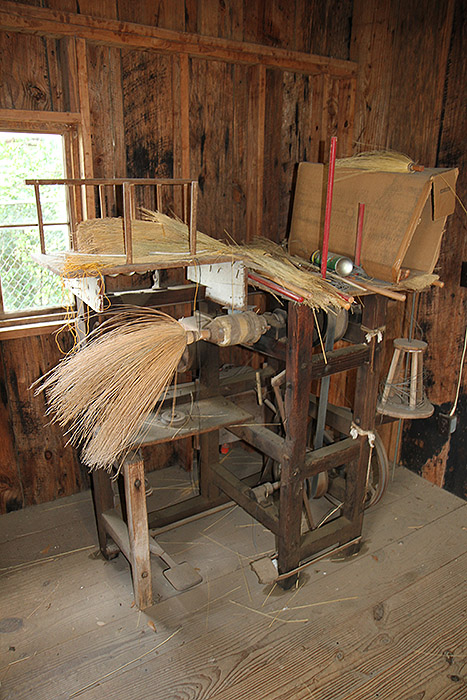
I also didn't have a lot of time for this stop so I spent most of it strolling the grounds to check out the old buildings.  One thing I learned was that I was genuinely interested in knowing how brooms were made.  I honestly didn't know this until I came here.

https://blogger.googleusercontent.com/img/b/R29vZ2xl/AVvXsEjYCtGYhJGnaZPYYSDkY10BJzqmkHLsnFnIDs_SaoeLvRBpVG1Qp5OXhZkwvkCwWJUrV2vZ_UjW5r8JyOoCtVS6Fq2JV45NgopOXmKOxJEYLpeBV4I_ph-PvbOuWbTHB9d5GZyW1qHPQV4Z/s700/oh2.jpg                https://blogger.googleusercontent.com/img/b/R29vZ2xl/AVvXsEhQQxo90-b35GBSPlI-IMUQtZ0ddkBhvaba7BcCQPyKmgWGQm4JjEr6eM_K0Yi2BHtHOPhtt9apJUMbblEIQdKmrP65e2bXLoEMn92rSyCHcWgMDikq1u1HSrHttN8ItcX2fZNOUrqt6EU6/s700/oh3.jpg

All right, so brooms don't grow in the wild...we've learned that today but there's an even bigger lesson to take away here.  In my opinion the most memorable building on the location is the "Arnold Outhouse":


Sure, it may not be as exciting as the See-Thru Bathroom in downtown Sulphur Springs but it is historically significant.  So much so that it has its own Historical Marker:


The marker reads:

     "Prominent Henderson businessman and civic leader John R. Arnold moved his family to this property in 1908. He added a second story to the home (razed in 1966) that already existed at the site. He also built a number of structures around the property, including this outhouse. It was larger than most standard outhouses of its day, and the milled pattern on the door and window facings matched that of the large Arnold house. The Arnold Outhouse is preserved to illustrate part of the lifestyle of 19th and early 20th-century Texans."

But that information is no substitute for witnessing an outhouse firsthand:


Yes kids, that's how it used to be.  This was the best case scenario for getting your "thinking done."  Ask your grandparents why there are catalogues and corncobs in there.

And when you start thinking about how bad the world is now, I would encourage you to always look on the bright side.  Despite political, economical and environmental turmoil...at the very least...we get to poop inside.  And sometimes that makes all the difference.